

Overview
The Superior Court was established by the United States Congress as the trial court of general jurisdiction for DC in 1970. This means it is the main trial court for DC where judges hear many kinds of cases. The court has a Chief Judge and 61 Associate Judges. The court is assisted by Magistrate Judges and several Senior Judges.
Chief Judge Milton C. Lee Jr.
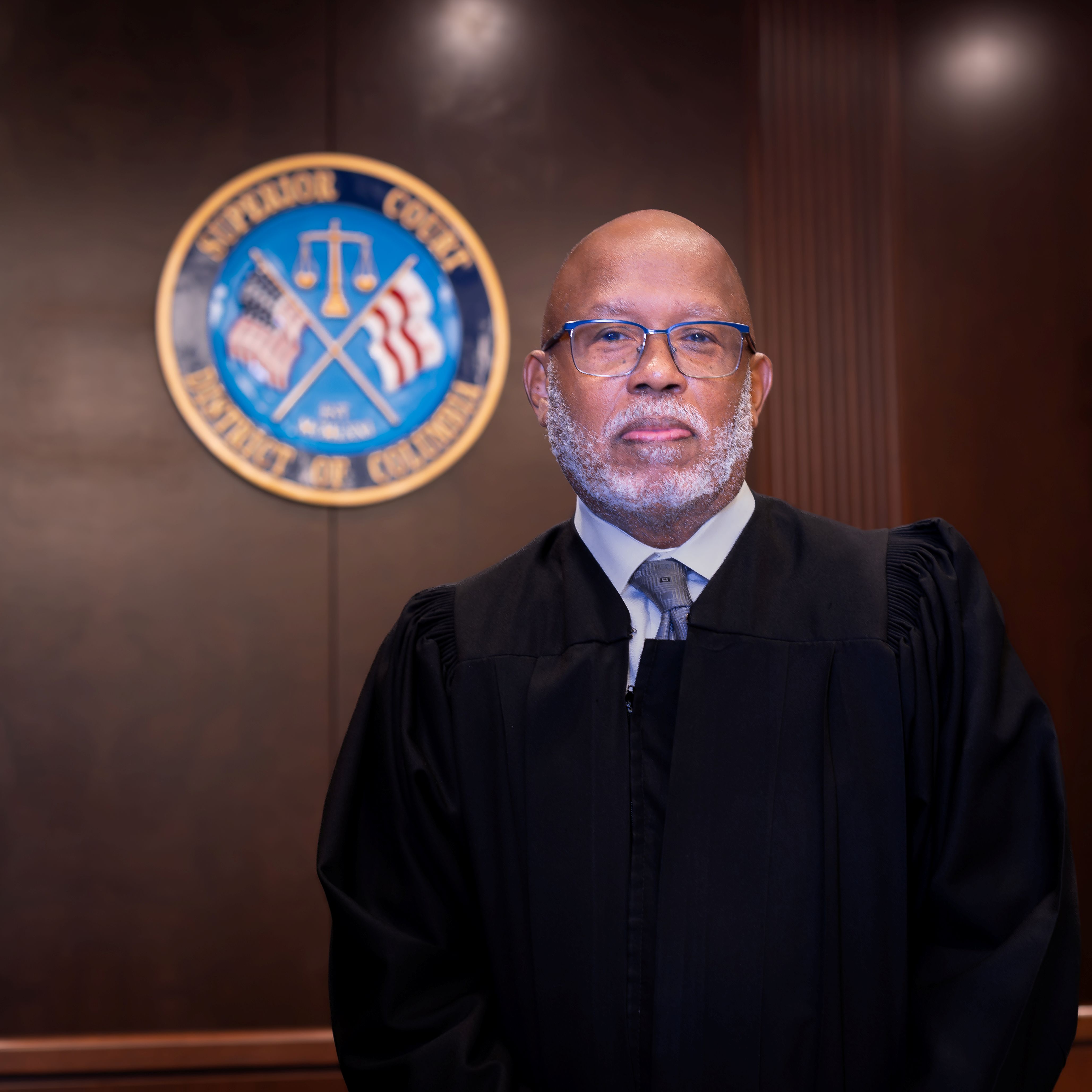
On October 1, 2024, the Honorable Milton Lee begins his four-year term as Chief Judge of the Superior Court. He has served in the Criminal, Civil, and Domestic Violence Divisions as well as the Family Court.
All Superior Court Judges
Chief Judge
An Associate Judge who is chosen by the Judicial Nominating Commission (JNC) to lead the D.C. Superior Court. The Chief Judge also serves on the Joint Committee that oversees the administration of both the D.C. Court of Appeals and the Superior Court. The Chief Judge is appointed to a four-year term and can apply to be reappointed.
Associate Judges
Associate Judges
An active judge who was selected by the Judicial Nominating Commission (JNC), nominated by the President of the United States, and confirmed by the United States Senate. They serve 15-year terms and can be reappointed. Associate judges can serve until they are 74 years old, at which time they can apply to become Senior Judges or retire.
Magistrate Judges
An active judge who was appointed by the Chief Judge of the Superior Court with the approval of the majority of judges in the Superior Court. They serve 4-year terms and can be reappointed. Magistrate Judges can serve until they are 74 years old.
Senior Judges
Senior judges are retired judges who have been recommended and approved to continue to help with cases as needed. They must receive recommendations from the D.C. Commission on Judicial Disability and Tenure and the Chief Judge. They serve 4-year terms if under 74 years old and 2-year terms if over 74 years old. They can be reappointed.
Clerking or Interning at the DC Superior Court
Working as a law clerk or intern at the DC Superior Court is a valuable opportunity to learn about the legal system and gain hands-on experience.
- Law clerks are law school graduates who help with legal research, review case records, and draft opinions. Most clerkships last for one year.
- Interns are law students who may do legal research, write memos, and learn about how the court works. Internships can be full-time or part-time.