
Biographies of Interdisciplinary Conference Participants
Judges' Bios
Chief Judge Milton C. Lee, Jr. | Judge Darlene Soltys |Judge Kelly Higashi | Judge Sherri Beatty-Arthur | Judge Kristin Hileman-Adams | Judge Everett D. MitchellSpeaker Bios
Dr. Alexandra Miller | Walter Jackson| Macon Stewart| Michael Umpierre |Read Judicial Bios
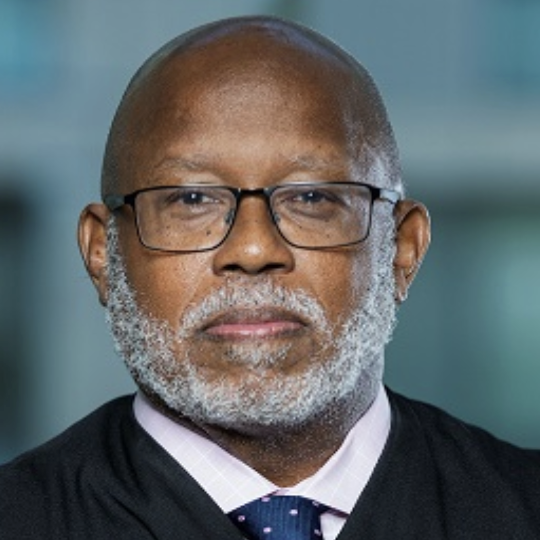
The Honorable Chief Judge Milton C. Lee, Jr. was appointed to the District of Columbia Superior Court in 2010 by President Barack Obama. On July 26, 2024, the District of Columbia Judicial Nominations Commission designated Judge Lee as Chief Judge of the Superior Court. Judge Lee begins his four-year term as Chief Judge of the Court on October 1, 2024. Judge Lee is a native of the District of Columbia. He received his Bachelor of Arts from the American University School of Justice in 1982. He obtained his Juris Doctor from the Catholic University of America’s Columbus School of Law. Following law school, Judge Lee joined the District of Columbia Public Defender Service as a staff attorney. He served as a trial attorney for many years, representing indigent persons in the Family, Misdemeanor, and Felony Divisions of the Superior Court. He also argued several appellate cases before the District of Columbia Court of Appeals. Judge Lee joined the District of Columbia Superior Court as a Magistrate Judge in November 1998. Since his appointment, Judge Lee has served in the Criminal and Civil Divisions of the Court and the Family Court. He served as the presiding magistrate judge from 2006 until his nomination. Judge Lee has remained active in both the legal and academic communities. He has continued serving the law school community as an adjunct faculty member and, in 1995, published an article analyzing the recent amendments to the Court’s juvenile detention statute. Judge Lee and the members of the Juvenile Law Clinic published a manual for practitioners in the area of special education advocacy. Judge Lee later authored an article entitled “What Truth Do We Seek?” supporting greater discovery in criminal cases. After serving on the Superior Court Task Force for Families and Violence, Judge Lee assisted in developing the Teen Court Diversion Program. In addition, Judge Lee has consistently contributed to the Criminal Practice Institute, Neglect Practice Institute, and many other local bar programs. He has also taught in the Harvard Trial Advocacy Program for several years. Recently, Judge Lee spearheaded the development of the District of Columbia Superior Court’s Fathering Court. The initiative represents a partnership between the Court, several governmental agencies, and the private sector that is directed toward creating opportunities for noncustodial parents to become meaningful contributors to the development of their children. The initiative has worked with many reentry parents by providing employment, educational training, parenting training and support groups, and wrap-around services for the entire family. The Fathering Court Initiative has garnered national recognition for its innovative problem-solving approach to reunited families.
Return to top of page.
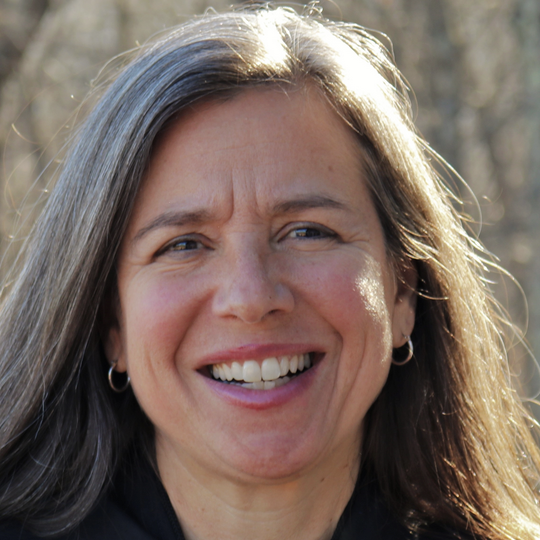
The Honorable Darlene Soltys was nominated in July 2015 by President Barack Obama for appointment to the Superior Court of the District of Columbia. The Senate confirmed her nomination as Associate Judge on December 17, 2015. Judge Soltys grew up in Anne Arundel County, Maryland. She graduated with honors from the University of Maryland, Baltimore County, majoring in Political Science and History, and received her law degree from Georgetown University Law Center (GULC). At GULC, she participated in the Criminal Justice Clinic, representing indigent people charged in the Superior Court. Judge Soltys served as the first law clerk to the Honorable Gregory E. Mize. She worked for the then-Office of Corporation Counsel, trying cases against juvenile respondents. Judge Soltys served as an Assistant State’s Attorney in Prince Georges County, Maryland, in the Child Abuse and Sexual Assault Section and later in the Homicide Section. In 2004, Judge Soltys joined the United States Attorney’s Office for the District of Columbia. During her tenure there, Judge Soltys served primarily in the Violent Crimes and Narcotics Trafficking Section of the Criminal Division, trying cases in federal District Court. Judge Soltys participated in long[1] term investigations using wiretap authorizations and other forms of electronic surveillance to infiltrate violent gangs and drug trafficking organizations alongside members of the FBI/MPD Safe Streets Task Force. Judge Soltys is a recipient of the Director’s Award for Superior Performance as an Assistant United States Attorney. She was named Senior Litigation Counsel in 2013 and received numerous special achievement awards from USAO-DC. Judge Soltys also collaborated with visiting foreign prosecutors and jurists and lectured at area law schools on gang prosecutions and electronic surveillance. Her first judicial assignment was in the Probate/Tax Division. Since 2019, she has served in Family Court, first in the Domestic Relations Branch handling divorce and custody cases, and now as Deputy Presiding Judge.
Return to top of page.
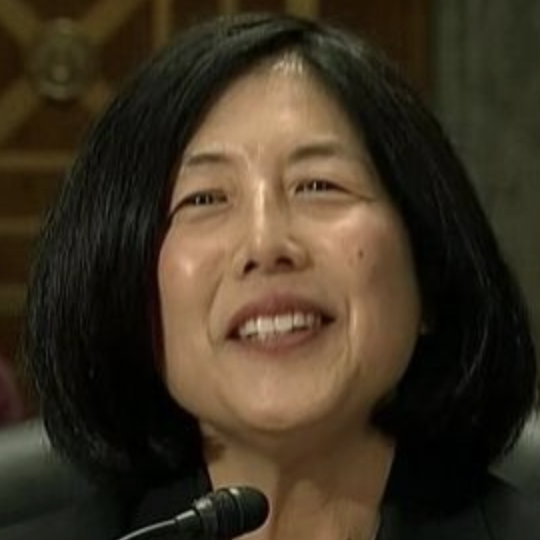
The Honorable Kelly A. Higashi was nominated by President Trump to be an Associate Judge of the Superior Court of the District of Columbia on February 5, 2018. Her nomination was confirmed by the United States Senate on July 12, 2018. Judge Higashi was born and raised in Los Angeles, California. She received her Bachelor of Arts degree in History from the University of Pennsylvania and her Juris Doctor degree from the George Washington University School of Law. After law school, Judge Higashi served as a judicial law clerk to the Honorable Frederick H. Weisberg of the Superior Court of the District of Columbia from 1992 to 1994. In September 1994, Judge Higashi was sworn in as an Assistant United States Attorney in the District of Columbia, where she served for twenty four years until her appointment to the Superior Court bench. For the last fifteen of those years, Judge Higashi served as the Chief of the U.S. Attorney's Office's Sex Offense and Domestic Violence Section. In that capacity, Judge Higashi led a section of thirty eight prosecutors who specialized in the prosecution, in both the United States District Court for the District of Columbia and the Superior Court of the District of Columbia, of sexual assaults, domestic violence, child abuse, stalking, human trafficking, online child exploitation, and sex offender registration offenses. Prior to that, Judge Higashi served as the Chief of the U.S. Attorney's Office's Misdemeanor Trial Section. In that capacity, she was instrumental in the creation of several diversion programs for misdemeanor defendants, such as the Community Mediation Program, and she was part of the multi-disciplinary group which implemented the first Community Court pilot project. As an Assistant United States Attorney, Judge Higashi investigated and tried numerous criminal cases in the Superior Court of the District of Columbia and in the United States District Court for the District of Columbia, including some of the most serious domestic violence and sexual assault cases involving both adult and child victims. Judge Higashi was the 2016 recipient of the United States Attorneys Association Harold Sullivan Award. She has also been awarded several United States Attorney's Awards for Special Achievement, the United States Attorney's Justice for Victims of Crime Award, the United States Attorney's Award for Excellence in Management, the United States Attorney's Award for Creativity and Innovation, and several Federal Bureau of Investigation, Washington Field Office Service Awards. For several years, Judge Higashi was a member of the Superior Court's Domestic Violence Rules Advisory Committee.
Return to top of page.
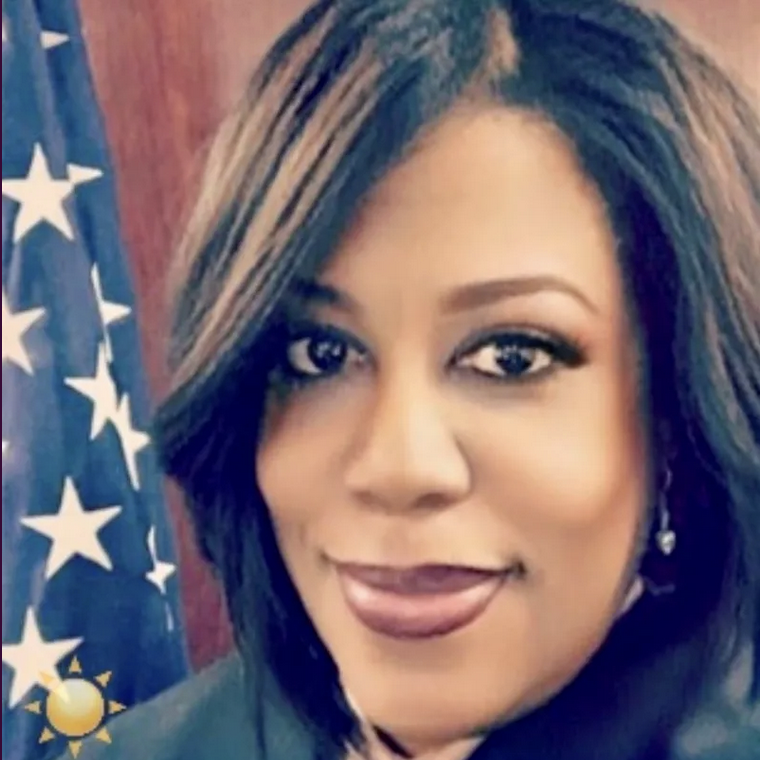
The Honorable Sherri Beatty-Arthur has served as a Magistrate Judge on the Superior Court of the District of Columbia since 2020. Before joining the court, she served as an Administrative Law Judge with the D.C. Office of Administrative Hearings, where she presided over matters in all jurisdictions, including Public Benefits, Regulatory Affairs, Rental Housing and Unemployment Insurance.
Judge Beatty-Arthur previously served as an attorney with the U.S. Department of Agriculture and the U.S. Securities and Exchange Commission, where she focused on civil rights and labor and employment. She also served as a Partner in the law firm of Arthur & Arthur, PLLC, where she represented clients in family law, employment law, and small business development. Mayor Adrian Fenty appointed Judge Beatty-Arthur to serve as the Board Chair and Chief Executive Officer for the Office of Employee Appeals for D.C. She also served on the executive team with the Public Defender Service for the District of Columbia, where she advised management on recruitment and human resources.
Judge Beatty-Arthur is the former Chair of the Washington Bar Association’s Judicial Council and the 2018 recipient of the Charlotte E. Ray Award from the Greater Washington Area Council of the National Bar Association for her commitment to minority women in the legal community.
Judge Beatty-Arthur received her Bachelor of Arts degree and MBA from the University of Maryland. She received her Juris Doctor from the Howard University School of Law.
Return to top of page.
The Honorable Kristin Hileman-Adams is a family magistrate for the Prince George’s County Circuit Court in the Seventh Judicial Circuit of Maryland. She joined the bench in October 2007.
Prior to joining the bench, Hileman-Adams worked as an assistant county attorney with the Prince George’s County Office of Law and an assistant state’s attorney with the Prince George’s County State’s Attorney’s Office.
She received a B.A. from Cornell University. Hileman-Adams went on to complete a J.D. at American University, Washington College of Law.
Judge Beatty-Arthur received her Bachelor of Arts degree and MBA from the University of Maryland. She received her Juris Doctor from the Howard University School of Law.
She was admitted to practice in Maryland, the United States District Court for the District of Maryland, and the United States Court of Appeals for the Fourth Circuit.
Her memberships have included the Maryland State Bar Association and the Prince George’s County Bar Association.
Return to top of page.
The Honorable Everett Mitchell is a fierce advocate for education and equity. Judge Mitchell was elected to the Dane County Circuit Court and presides over the Juvenile Division in Branch Four. As a juvenile court judge hears cases involving family re-unification, juvenile delinquency, and other civil and criminal proceedings. Judge Mitchell also oversees Dane County’s High Risk Drug Court Program.
Long before, Judge Mitchell was elected as a judge, he grew up as the son of single mother. Eventually, his mother married and the step-father sexually and physically abused Judge Mitchell and his sister for 12 years. At the age of 18 years old, a teacher called child protective service which allowed Judge Mitchell the opportunity to finish high school. As a result of those years of trauma, Judge Mitchell was functionally illiterate. He was offered a job bagging groceries when he received a call from Jarvis Christian University offering him an opportunity to attend college. Initially, Judge Mitchell declined but the counselor encouraged him to come give college a try and if college didn’t work out, then he could go back to bagging groceries. Judge Mitchell wanted to attend college and become the first person in his family to earn a college education. He went and failed every course because his illiteracy was exposed. While putting on his backpack to return home and bag groceries, two teachers at Jarvis, Mrs. Daisy Wilson and Mrs. Margaret Bell pulled Judge Mitchell to the side and said, “You are a diamond in the rough and we don’t want you to give up on your dreams of a higher education.” They taught Judge Mitchell how to read, organize notes, study for classes and the discipline of studying every night from 5 to 10 pm. Mrs. Wilson told him, “take your boom box, headphones and sit down to study.” Judge Mitchell studied and turned his 1.5 into a 4.0 in that semester. He eventually transferred to Morehouse College and graduated with a degree in Mathematics and Religion. He then furthered his education by obtaining two Master’s Degrees from Princeton Theological Seminary. Eventually, he earned his Juris Doctorate from the University of Wisconsin-Madison Law School.
He is an adjunct professor at the University of Wisconsin-Madison Law School where he teaches courses on “Race, Racism and the Law” as well as the “Foundational Principles of the Juvenile Justice System.” He is committed to dismantling what he describes as the child welfare-to-juvenile delinquency-to-adult prison pipeline operating not only in Wisconsin but nationwide. In this pipeline, systems pass traumatized children from one system to the next without acknowledging or addressing their trauma. His approach is documented in the Wisconsin Public Television Series, “Not Enough Apologies: Trauma Stories.” He believes passionately in the endless potential of children and communities to transform their trauma stories. As a trauma survivor himself, Judge Mitchell approaches each case with an eye towards making sure the court system does not contribute to the ongoing traumatic narrative that many children and families experience. He often tells the children in his court, “I am not your judge, I am your reflection.”
During his tenure on the bench, Judge Mitchell has worked with colleagues to change courtroom policies to reflect trauma informed practices, such as removing restraints and handcuffs on youth during hearings. He joined several judges in petitioning the Wisconsin Supreme Court to support changing the presumption to ensure that children in Wisconsin can attend their court hearings without restraints and handcuffs. Judge Mitchell worked with the Madison Metropolitan School District, the second largest district in the state, to create an Office of Youth Engagement that provides a bridge for youth involved in the criminal justice system to educational programming.
He also initiated conversations with the school district to create more inclusive policies and practices concerning youth involved in the criminal justice system, many of whom also receive special education and related services, by reducing the number of students on shortened school day schedules so their hours of instruction are increased.
Judge Mitchell works tirelessly to ensure the youth under his jurisdiction are treated with respect and dignity. While this may be common sense, it is not always common practice. After a visit to a youth prison in Wisconsin and hearing from the incarcerated young men there, he advocated that black and brown children receive haircuts by a licensed barber and not a dog groomer.
At every opportunity, Judge Mitchell tries to connect the community with incarcerated youth and adults. Through his support, members of the Black Law Students Association, the African American Council of Churches, and Civic leaders regularly visit the local detention center so to community leaders can eat lunch with and engage youth in the detention center.
Judge Mitchell is adamant that the first time people see him should not be when they appear before him in court. In contrast, he is a man woven into the fabric of his community and has visited over 30 schools in Dane County to talk with children about the juvenile justice system and empower them to think of themselves as renaissance men and women—who have the capacity to be the change they want to see in the world. Judge Mitchell has also lectured or spoken at colleges and universities, national conferences, community events, corporate events, professional development workshops, and in front of many other diverse audiences.
Judge Mitchell’s social justice lens is steeped in his calling and commitment to justice and equity. Since 2011, Judge Mitchell has served as Senior Pastor of Christ the Solid Rock Baptist Church in Madison, Wisconsin. He serves the congregation with passion, vision, and dedication. The mission of the church is, “…to be a place where everybody is somebody.” Under his leadership, Judge Mitchell recently led the congregation into a formal alliance with a majority white congregation so that both congregations can be intentional about dismantling the racial barriers that make Sunday morning “…the most segregated hour in America.”
Service is at the heart of Judge Mitchell. As the Co-Chair of the United Way of Dane County Community Engagement Committee, he created a process to provide grass roots organizations with seed funding so many could continue their work of supporting low-income families, domestic abuse victims, and children. His consistent dedication has been recognized within the community. Among the many awards he has received, Judge Mitchell is most proud of being honored with the 2017 City of Madison and Dane County Reverend Dr. Martin Luther King Jr. Humanitarian Award.
Judge Mitchell understands the magnitude of Bryan Stevenson’s words when he wrote, “…The true measure of our character is how we treat the poor, the disfavored, the accused, the incarcerated, and the condemned.”
The Honorable Reverend Everett Mitchell continues to leverage his knowledge and power to lead with purpose so those who are not at the table, have their voices and interests represented.
Return to top of page.
Read Speaker Bios
Dr. Alexandra Miller joined the Center in June 2019 and now serves as the Center’s Deputy Director for Multi-System Operations. In this capacity, Alex oversees the development, evaluation, and implementation of the Crossover Youth Practice Model and the provision of technical assistance to agencies overseeing youth involved in the child welfare and juvenile justice systems.
Prior to joining CYJ, Alex earned her Ph.D. in Special Education from the University of Virginia Curry School of Education and Human Development. Alex’s research focused on special education and transition services for adjudicated youth with disabilities in the juvenile justice system, on which she has published various articles. Throughout her Ph.D. program, Alex regularly tutored students and served as a consultant to the education staff in a juvenile detention facility.
Alex earned her M.T. in Special Education from the University of Virginia, and worked as a special educator in northern Virginia for four years. She graduated with a B.A. in Communication Arts and Writing from Ramapo College of New Jersey.
Return to top of page.
Walter Jackson is currently the Assistant Director for the Community Services Division (CSD) at the Prince George's County Department of Social Services. In this role, Walter is responsible for managing Homeless Prevention and Continuum of Care Programs.
Walter joined the Prince George's County Department of Social Services as the Deputy Assistant Director of Child, Adult, and Family Services in 2013 and advanced to Assistant Director in 2018, where he served until 2024. As the Assistant Director, he oversaw programs including Child Protective Services, Foster Care & Adoptions, Family Preservation, and Policy, Practice & Ready by 21, as well as services for at-risk adults. His leadership led to significant milestones and groundbreaking achievements for the department.
In addition to his work with the Prince George's Department of Social Services, Walter has been an Adjunct Instructor at Towson University since 2004, teaching Juvenile Justice & Delinquency and Introduction to Criminal Justice. Walter also held various positions at the Maryland Department of Juvenile Services from April 1994 to March 2013, including Case Management Specialist, Executive Assistant, Assistant Director, Area Director, and Assistant Regional Director.
Walter holds a Bachelor of Science in Sociology & Justice Studies and a Master of Science in Criminal Justice Administration.
Return to top of page.
Macon Stewart is a Senior Fellow/Deputy Director in the Georgetown University McCourt School of Public Policy Center for Youth Justice. Macon is recognized as one of the country’s foremost experts on systemic reform to address the needs of youth involved with multiple human service or legal systems. Her portfolio includes serving as one of the authors of the Crossover Youth Practice Model and managing its implementation in 100+ communities across the country. She has written and co-authored scholarly publications on the intersection of child welfare and juvenile justice. Her current research interest center around understanding and addressing the needs of Black Girls involved with multiple systems. Additionally, she serves on the Justice Consortium for the National Child Traumatic Stress Network, the North Carolina Governor’s Crime Commission’s Racial and Ethnic Disparities Subcommittee and consults with other universities to support advancing systemic reform in communities across the country.
Working to improve how systems address and respond to children and youth on a micro and macro-level has been and will continue to be the passion exemplified in her work. In her community, she serves on the Executive Board for the Rowan Co. Literacy Council, is actively involved with the Salisbury-Rowan Branch of the NAACP and is a literacy volunteer at a local middle school.
Macon holds a Master of Social Work degree from the University of Pittsburgh and a bachelor’s degree in criminal justice from the University of North Carolina at Charlotte.
Return to top of page.
Michael Umpierre the Director of the Center for Youth Justice, where he is responsible for overseeing all of CYJ’s programs, initiatives, research, and operations.Michael has dedicated his career to improving the lives of youth, particularly those who are underprivileged, vulnerable, and most in need. He has a wealth of experience as a juvenile justice administrator, national trainer and consultant, public defender and youth advocate. His previous experience includes serving as the Chief of Staff of the District of Columbia’s cabinet-level juvenile justice agency, the Department of Youth Rehabilitation Services, Program Coordinator of the National Center for Youth in Custody, and trial attorney at the Public Defender Service for the District of Columbia. He has also worked at several youth advocacy organizations including the Youth Law Center, National Center for Youth Law, Legal Services for Children, and Pacific Juvenile Defender Center.
Michael received a B.A. in Public Policy from Stanford University and a J.D. from Yale Law School, and is a recipient of the prestigious John Gardner Public Service Fellowship and Paul and Daisy Soros Fellowship for New Americans. Michael and his wife Rachael are the proud parents of their son Alexander and daughter Josephine.
Return to top of page.